



How technology can improve the quality of justice in the light of the Spanish experience
The article analyses how digital technologies and artificial intelligence are transforming justice systems, taking Spain as a central case study. It reviews the rapid evolution of judicial digitalisation – from systems like SIRAJ, PNJ, LexNET and eEDES to emerging AI‑driven tools capable of automating document analysis, predicting case outcomes and supporting judicial efficiency – while situating these developments within wider European strategies such as DigitalJustice@2030. Despite Spain’s pioneering position, the article emphasizes structural weaknesses, including high litigation rates, limited judicial staff and fragmented case‑management systems. It argues that real digital transformation requires problem‑driven design, stakeholder participation and process audits rather than merely deploying advanced technologies. The author proposes measures such as ODR platforms, advisory chatbots, automated alerts, expanded process automation, improved data governance and enhanced interoperability at both national and European levels. Ultimately, the article contends that AI should augment, not replace, human judges, and that data‑driven, ethically grounded innovation is essential to achieving efficient, fair and sustainable justice.
In the definition of Moisés Barrio[1], “a successful jurist from the 21st century will be a professional who knows how to use digital tools to perform the repetitive data collection and information screening tasks, then apply his intellectual skills to frame questions and arguments, and give a suggestive view that the software alone cannot provide”.
Some years ago what was ‘new technology’, it is not our present, it has been often the past due to the exponential rhythm of evolution.
We forget that many tools we use daily in Spanish courts didn’t exist for many years: SIRAJ[2], PNJ[3], virtual display boards, procedural management systems, videoconferences[4], Lexnet, digital file or cryptographic electronic signature. We can therefore think that some tools and technologies that can now be pioneering in Spain would common around the world courts and tribunals in a few years.
In addition, several years ago, the European Commission designed its ‘AI for Europe’ strategy to be present in the development of AI, offering a public and private investment reaching a total of EUR 20 billion over the period 2018-2020 and a gradual increase until 2027[5].
If we check the European Digital Agenda, Horizon Europe and Digital Europe will invest a billion euros in AI. The Commission will also mobilize additional investments from the private sector and the Member States to reach an annual investment volume of 20 billion euro by the end of the digital decade. The Recovery and Resilience Mechanism makes available EUR 134 000 billion for the digital sector.[6]
Member States can call upon the Commission’s technical support[7] available through the Directorate-General for Structural Reform Support (DG REFORM) under the Technical Support Instrument, with a total budget of EUR 864.4 million for 2021 to 2027. Since 2021, the TSI has been supporting projects directly linked to the effectiveness of justice, such as the digitalisation of justice, reforms of judicial maps or better access to justice.
All this is also financed by the Next Generation EU funds, which are based on three pillars: digital, green and what we could call a hotchpotch of proposals.
However, those three pillars reflect three well-defined objectives, namely ‘digital sovereignty’, which implies not depend on US and Chinese data; ‘energy sovereignty’, which implies not depend on Russian or Algerian gas or Arabic oil, and, finally, a hotchpotch of proposals of employment, mobility, social inclusion or better public administration, which clearly circumscribes the path towards the integration of the United States of Europe.
We can say that one of the possible pillars of a more confederal Europe is European justice. The EU has advanced the DigitalJustice@2030 Strategy and the European Judicial Training Strategy 2025-2030. The first emphasizes the need to integrate digital education and AI as horizontal content at all levels of judicial training. And DigitalJustice@2030 promotes interconnected digital justice, based on reliable data and technologies, respecting fundamental rights.
For example, the e-evidence digital exchange system (eEDES) is an IT tool whereby Member State authorities can securely exchange European investigation orders, mutual legal assistance requests and associated evidence in digital format.
We know that AI poses a number of problems to the legal world in practice. Many tasks can be automated, such as the search for case law, the analysis of documents or the preparation of draft contracts or resolutions. There are already developed AI solutions that can analyse thousands of judgments, cases and judgments, extract relevant information, interpret it and learn it through a system of automatic learning. In some countries there are already programs that can analyze thousands of simple court files within a few days. There are also systems for analysing judges’ and courts’ decisions with the aim to design the best legal strategy, given the precedents, the most appropriate ones or the chances and probability of winning a case, the length of proceedings in a concrete court or the prediction of success in an appeal. AI is called to be a catalyst for the transformation of the activity and the digital presence of the public administration by improving the effectiveness and efficiency of its processes.
According to Perea[8], “implementation of legislation is not enough to be, must be based on parameters of effectiveness (compliance) and efficiency (achievement of objectives at lower cost). To this end, document automation applications will be irreplaceable allies”.
While Spain is at the forefront and pioneering in the area of digital justice and AI innovation in justice, further developments in other countries will also certainly come to Spain.
Just as there is an unstoppable race between Generative AI commercial solutions, such as ChatGPT, Claude, Gemini, Perplexity, GROK, etc. in the area of justice and judicial powers, the global race is similar. The European Digital Agenda and Next Generation EU funds are a reality and the judiciary and administrations throughout the world invest considerable amounts of public money in digitalization and technology for the judiciary and the administration of justice. It may be said that it is even difficult to follow all the launches of new tools in this area.
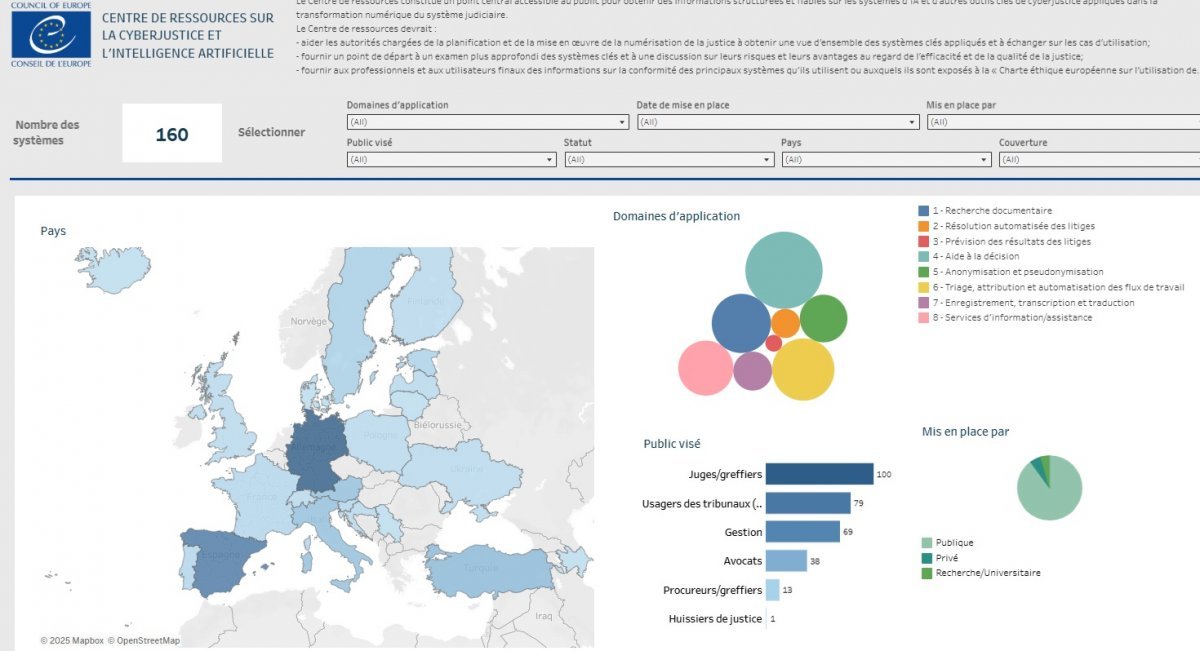
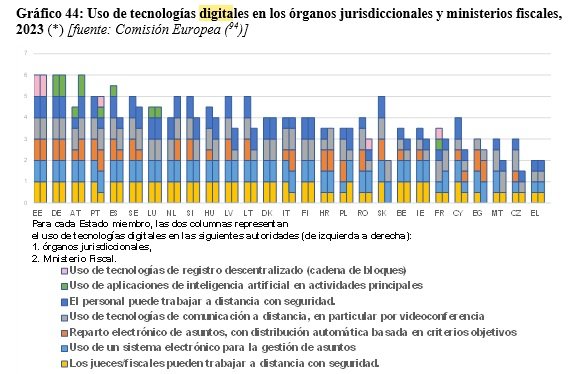
The Spanish Centre for Judicial Documentation (CENDOJ) of the Spanish judiciary is a pioneer and is at the forefront of Europe, like the Spanish Ministry of Justice. This is reflected in the CEPEJ Resource Centre, which is headed by Germany or according to the EU Justice indicators 2024 of the European Commission[9].
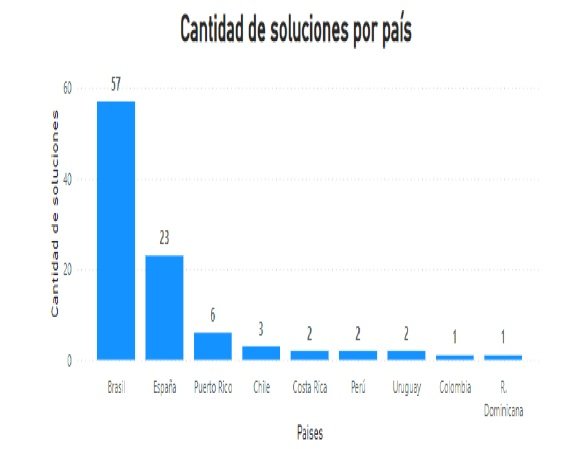
Similarly, though from few years ago, we can mention the report of Working Group No 4 on Technology and its judicial function, proposal: Artificial intelligence applications within the Iberian Latin American judiciary of the Iberia-American Judicial Summit XXI Edition: ‘For an Independent and efficient judicial career” in 2022,[10] which mentioned Spain as the second Latin American country in digital solutions.
However, given the so high level of litigiousness, the organization of the judicial system and a small number of judges per capita compared to the European average, it is considered that it remains a lot to be done in order for Spanish justice to be truly efficient, rapid and effective.
In Spain, the Digital Efficiency Act[11] states ‘automated judicial decisions’, ‘proactive decisions’ and ‘assisted decisions’, although it is considered that an important opportunity has been lost to regulate artificial intelligence and the automation and robotisation of court processes in depth.
In this article and in a forthcoming book (Towards a genuine transformation of justice with AI: Worldwide comparative analysis 40 unconventional proposals) that is going to be published this year with the publisher Aranzadi-La Ley I’ m going to make a number of proposals that try capitalize the comparative knowledge and experience that I had acquire as a member of the Advisory Board in the CEPEJ or as international AI consultant for UNESCO and EL PAcCTO 2.0 and with a knowledge of many judicial powers on both sides of the Atlantic, from Europe and from Ibero-America.
In this regard, the European Ethical Charter on the use of artificial intelligence in judicial systems and their environment, adopted by CEPEJ[12]: ‘the use of such tools and services in judicial systems seeks to improve the efficiency and quality of justice and should be encouraged. It must, however, be carried out with responsibly, with due regard for the fundamental rights of individuals as set forth in the European Convention on Human Rights and the Convention on the Protection of Personal Data, and in compliance with other fundamental principles set out below, which should guide the framing of public justice policies in this field.
[...]
155. Firstly, it is essential to hold a public debate around these questions, bringing together both the designers of the tools and legal profesisionals.
Judicial councils, professional associations of judges and bar associations can undoubtedly contribute to this and help to identify opportunities and the most controversial aspects. In addition, judicial training and law schools can play a key role in raising awareness among justice professionals on these issues, so that they can better understand and practically contribute to current developments”.
One of the most widespread main problems with digital transformation, is that the implementation of digital solutions and new programmes or robotisation systems does not necessarily implies a genuine digital transformation.
According to the Conference of United States COSCA for the Administration of State Courts[13], “It is tempting to start taskforce work with these two questions, ‘How can we best use AI?’ and ‘How can we mitigate or minimize the risks of using AI?’ A better approach is to first decide what problem a court is trying to solve, and then develop possible solutions, before turning to the question of whether there is an AI tool that will support the solution. In other words, start with the problem, not the technology. AI might be helpful or it might not, but what should guide your inquiry into possible technological help should be the needs of your court, not a desire to use one particular piece of software”.
Margaret Satterthwaite, Special Rapporteur on the independence of judges and lawyers, said[14]: “AI is valuable only when it improves justice in concrete ways; it should not be pursued as an end in itself. Those considering using AI should assess which justice problems it can help to solve, whether it is fit for purpose and when it may make things worse”.
The development of technological tools for justice is sometimes contrary to what should be. Thus, without judges, magistrates, judicial secretaries, civil servants, lawyers or solicitors participating in the ideas, design, evidence and implementation of solutions, technology companies offer software ready to use and the administrations take and purchase them without assessing whether is a necessary, reliable or adequate way.
In many cases, we look at technology and not people, objectives or needs. The emphasis is on technologies and not on real digital transformation. It is not a question of purchasing the most modern, new or most expensive technology, it’s about the most suitable technology for solving and improving the problems. Technology is not the end in itself, it’s a mean and a tool for optimising and improving work and solving problems.
On the contrary, the process should be the opposite. For a real digital transformation, the first step consists of identifying weaknesses, pain points, problems and needs by listening to the actors concerned and knowledge of the functioning and management of the administration of justice organization. In most cases, and even more in the justice are, the newest technology is not crucial, but the problem needs to be properly identified.
Ultimately, it is first necessary to know the context and carry out a process audit. We should reming that not all processes need to be digitalised. Firstly, perhaps we should delete some of them. The expression “there is nothing quite so useless, as doing with great efficiency, something that should not be done at all”, is a famous quote from Peter Drucker, the father of modern management, who emphasizes that efficiency is only useful when it applies to the correct tasks, warning against blind occupation in activities without a real purpose or value, which is a loss of time and resources.
Further develop the European Ethical Charter on the use of artificial intelligence in justice systems and its environment: “Designers of machine learning models should be able to draw widely on the expertise of the relevant justice system professionals (judges, prosecutors, lawyers, etc.) and researchers/lecturers in the fields of law and social sciences (e.g. economists, sociologists and philosophers). Forming mixed project teams in short design cycles to produce functional models is one of the organisational methods making it possible to capitalise on this multidisciplinary approach”.
Therefore, first of all in any judicial system (I am unaware of anyone who has done so in such detail), it would be to do a contextual analysis that would identify key processes, cost and return opportunities by identifying the most important processes, the largest opportunities for beneficiaries, the possibilities that require more resources and those that need more time to develop and implement them. This is an appropriate analysis of the context, planning, participation and complicity of stakeholders.
However, I will make some of the proposals that I have made in my next book.
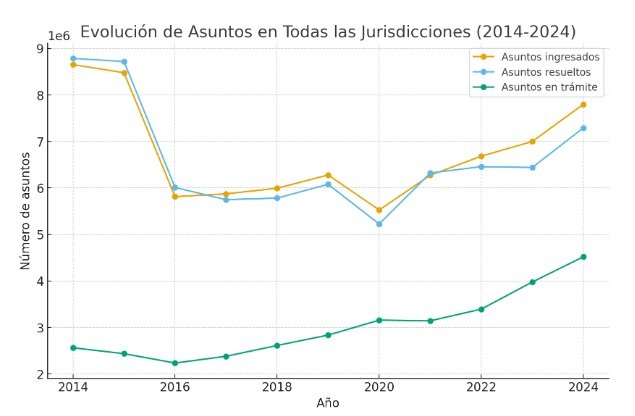
Since the 2014s and 2015s, we have seen in Spain in recent years the record of new cases to the courts, which makes the De-judicialization of cases urgent and necessary. Every year, the litigiousness breaks the new record.
Therefore, squeezing the Organic Law 1/2025 of 2 January on measures for the efficiency of the public justice service and on the introduction of ADR alternative dispute resolution methods, it would be a good opportunity to introduce an ODR Online Dispute Resolution. Justice cabinet could publicize and promote it with tax advantages, cost savings or other technological promotion measures such as the use of blockchain and smart agreements. Indeed, despite the increase of cases resolution rate, the number of new cases continues to increase in a greater proportion than the resolution rate, what it implies the increase of the pendency rate.[15]
In addition, the White Paper on Artificial Intelligence and Lawyers[16] confirms that the use of AI in practice by lawyers is about 58.9 % positive answers.
Curiously, compared with 2024 Future Ready Lawyer Survey Report by Wolters Kluwer[17], only a year ago, in Europe, the Netherlands lawyers carried out the daily use of generative AI at 42 %, followed by Germans at 38 %. In a single year, the use of AI by professionals will have followed a general escalation in all countries, however 58 % Spanish data shows that Spanish lawyers can be among the most automated European lawyers and more litigants.
De La Torre and Prieto (2022)[18] states that judicial proceedings may entail for each party a cost of at least EUR 500 and a procedural cost of EUR 3 000. If at least 10 % of cases were mediated, the State could save EUR 177 billion. If it were at least 30 %, the economy would save EUR 530 billion. They also argue that there are some 590.000 judgments in Spain, 30 % of which could well move towards an online dispute resolution tool. It is true that the repeal of Regulation 524/2013 and the abolition of its online platform have been a failure of ODRs for Europe. Nevertheless, the reduction in litigation is essential in order to avoid judicial collapse, so it would be necessary to analyze the causes of that failure.
Another outstanding issue could be an advisory chatbot for citizens and professionals. The Portuguese Practical Guide to Justice (Operation, Portugal, Authority, 2023, Utilisaarios of the Audiencia Nacional, public in general)[19] is a tool accessible to all citizens, which aims to accelerate their interaction with the justice system to find the information they need at each time and may be an excellent example.
I also highlight the simplicity of judicial application form claims, such as that developed by Tribunal 101[20] of the Administrative Court of Magdalena, Colombia. Guided by her judge, María Victoria Quiñones Triana, friend and one of the most pioneer and experienced judges on artificial intelligence. This makes very easy the identification of the different fields, the labelling of data or compliance with all the procedural requirements by an automatic verification system. It would also facilitate the systems of registration and allocation of cases through a batch procedure, as well as the localisation of errors, corrections or duplicate claims and cases.
Spain is one of the countries with the largest number of foreign retired residents living in our coasts, and we are the second country with thee world’s largest foreign tourism[21], so the request for criminal records of foreigners could be automated by identifying nationality and an automatic application to ECRIS.
Regarding automated alerts, I am confident that there is significant progress to be made in this area. This is a very simple, inexpensive field which is likely to improve justice in a very highly effective way by determining whether appeals have been lodged out of time, whether the time limit for the investigation has expired, whether there is prescription, time-barring, excessive time taken to deal with the case or the proceedure has been paralyzed or too long before the judicial decision has been enacted.
Spain also has experience of automation of processes through pilot programmes in civil jurisdiction for money claim procedures in territories such as Murcia or Caceres. In Spain, the money claim procedures are those which enable pecuniary claims proved by prima facie evidence to be recovered. In the civil jurisdiction, they can represent up to 60 % of the total cases. I believe that this automation of processes can extend to more areas of what is called ‘voluntary’ jurisdiction, measures to support persons with disabilities, internments, house evictions, etc.
I firmly believe that registered mail with acknowledgement of receipt should no longer be used for notification or initial formal notice in Spain. This would be very simple to replace by a legal reform by accepting the email with acknowledgement of receipt (buroemail), which was previously provided in the complaint or contract by the party or which appears in official databases.
Today, according to the data justice portal, remote hearings are more than in-person in Spanish courts. However, the creation of deepfakes, including in real time on videoconferences, has become more accessible due to as a service apps which enable people to exchange faces or generate avatars with a minimum of effort.
Victoria Kolakowski J sensed that something did not go well with evidence 6C. Produced by the applicants in a dwelling dispute in California, the video displayed to a witness whose voice was disarticulated and monotone, with the curved face and without emotion. At regular intervals of approximately a few seconds, the witness would exhibit physical reactions consistent with trembling, and would repeat her statements.
Kolakowski, who is part of the High Court of Alameda in California, has briefly understood the reasons why: the video had been produced using generative artificial intelligence. By using any generative AI system, you can create an image, an alternating video, a document or an invoice which is imperceptible and indistinguishable from a true image. ‘Does judges start to be taken into consideration, is this really obvious? Was this answer modified? Is it an deepfake?’[22]
Deepfakes represent an emerging challenge in verifying identity for tribunals and courts, which requires the development and deployment of strong new defences.
During the execution and payment phase, I propose the introduction of PAD PIN terminals not only for the digital signature of hearings not printed on paper, but also for the payment by credit card of fines or judicial sanctions linked to the judicial bank account. Someone could consider this idea scandalous, aberrant or deprived by the courts due to the solemn, rigour or formality they must have, turning them as shopping centres. However, in my view, the real loss of prestige, reputation, solemnity, and failure is that, according to the Spanish statistics Justice Dato a dato 2024 while there are one million registered judgments, and one million resolved executions, almost 3 million executions are ongoing.
The use of data in the area of justice could also be improved with better use that could allow increased productivity of human resources. A real-time early warning system for judicial black points could be established to assign more magistrates, increase staff and facilities, and deploy task forces as needed. Officials, judges, and prosecutors could also be temporarily reassigned. Similarly, in a situation of crisis or significant increase in cases on specific issues, it would be possible to predict which court or courts will be most affected by an increase in the money claim cases, and allocate more resources in order to avoid their collapse and mitigate the raise. A proper data analysis should facilitate judicial reform and the establishment of litigation patterns by a predictive analysis that would improve the allocation of material and human resources to those where they are most in need, by identifying trends, areas with high justice pendency and any reforms and decisions needed to improve the efficiency of the judicial system by allowing in real time to rebalance the workload and dedicate resources where they are most needed.
This paper hasn’t yet addressed the automated drafting systems for court decisions, such as those developed by CENDOJ for flight claims, which could also be applied to banking disputes, truck cartel, judgments rendered in absentia, or conformity criminal cases.
Finally, we must conclude that when AI strength is based on data, volume, quality and interoperability, the existence of 10 case management systems, as is the case in Spain and a division of competences within the administration of justice between 3 separate administrations is a net handicap. It has been the cause of many problems for inefficient decades, however generative AI extends even more this lack of competitiveness. This will lead to a gap between the deployment of AI in countries where justice is centralized and those that are decentralized. Many regional administrations will not be able to acquire supercomputing centers and graphic processing units (CPUs and GPUs) due to their very high costs. The lack of interoperability and unity in a procedural data lake, case law, judicial statistics or prosecution data makes it impossible to develop generative AI developments like those in progress in Brazil. And in Europe, as a result of the geopolitical situation, European digital sovereignty on one of the strategic and structural issues of the State such as the judicial power should be a factor to be taken into account. So that, the only solution may be to move towards a single European case management for European courts and tribunals and a genuine European justice connected and interoperable with a single videoconference system and a European AI judicial system.
In short, AI must be designed as a tool, an instrument for accelerating, assisting, supporting, eliminating and reducing repetitive tasks and low added value, but never as a replacement of the human judge. This is not a replacement, but a tool for enhancing productivity, activity and human intelligence.
In addition, it is necessary to focus justice on commercial intelligence in which its data are used in order to improve decision-making on its resources, functioning and structures.
Finally, in justice area and using Sanchez del Campo words[23] we should be ‘as ambitious as possible because, even in this case, we are likely to be short given the accelerated development of technologies in recent years’. The technology we are considering could become obsolete quickly, so it is essential to go as far as possible in order to save the largest budget, to make the best use of it and to make the results as effective and sustainable as possible.
1. Barrio, M. (2019, 10 December). Towards digitalisation of legal professions. Real Instituto Elcano. Consulted on 3 February 2024. Available at: http://www.realinstitutoelcano.org/wps/portal/rielcano_es/contenido?WCM_GLOBAL_CONTEXT=/elcano/elcano_es/zonas_es/ari116-2019-barrio-hacia-la-transformacion-digital-de-las-profesiones-juridicas.
2. System of administrative registers supporting the administration of justice) is a centralised Spanish database of information on penalties, precautionary measures, sanctions, domestic violence, minors and sexual offenders. Its updated version, SIRAJ2, facilitates fast judicial management, exchange of data with the EU and access to law enforcement authorities.
3. Punto Neutro Judicial (PNJ) is a network of services set up by the General Council for the Judiciary (CGPJ) to support judicial bodies in Spain, which gives judicial bodies direct access to more than 35 databases of institutions and administrations, such as property consultations, professional life, criminal records, vehicles database, addresses, etc.
4. LexNET is the secure information exchange platform between judicial bodies and professionals involved with the Administration of Justice; with full legal effect, it is provided by the Ministry of the Presidency, Justice and Parliamentary Relations of Spain. LexNET allows for the digital submission of documents, as well as the transfer of copies when needed, by legal practitioners. It also allows for the delivery of notifications from judicial bodies. LexNET has incorporated Natural Language Processing (NLP) to Streamline the update of new procedural documents. In particular, NLP is used to scan the documents (to be forwarded to judicial bodies) and extract the different nominal entities contained therein. Those entities are then matched with the fields of the form that must be completed to properly road the forward of any document – fields that the user would have needed to select Manually, one by one. However, when matched, such fields are Automatically set to the value of the extracted nominal entities, thus Releasing the user from such manual burden. A process that used to take minutes, now is reduced to a few seconds thanks to AI.
5. Spanish R & D & I strategy in the field of artificial intelligence.
6. European Commission (2021). European approach to artificial intelligence. Consulted on 3 February 2024. Available at: https://digital-strategy.ec.europa.eu/en/policies/european-approach-artificial-intelligence.
7. https://ec.europa.eu/info/funding-tenders/opportunities/portal/screen/programmes/tsi.
The Technical Support Instrument Regulation was adopted in March 2021 and aims, in accordance with its Article 5, to support: “....institutional reform and efficient and service-oriented functioning of public administration and e-government, simplification of rules and procedures, auditing, enhancing capacity to absorb Union funds, promotion of administrative cooperation, effective rule of law, reform of the justice systems, capacity building of competition and antitrust authorities, strengthening of financial supervision and reinforcement of the fight against fraud, corruption and money laundering”.
8. Perea González, Á. (2022, 9 November). Document automation tools: towards efficient justice. Expansion. Consulted on 14 September 2025. Available at: https://www.expansion.com/jurídico/opinion/2022/11/09/636b8376e5fdead55b8b4656.html.
9. European Commission Communication from the Commission to the European Parliament, the Council, the European Central Bank, the European Economic and Social Committee and the Committee of the Regions 2024 EU Justice Scoreboard, COM(2024)950 final; Brussels.
10. Consulted on 4 February 2026. Available at: https://www.cumbrejudicial.org/sites/default/files/2023-08/Aplicaciones%20de%20Inteligencia%20Artificial%20en%20los%20Poderes%20Judiciales.pdf.
11. Real Decreto-ley 6/2023, Royal Decree-Law of 19 December 2023 approving urgent measures for the implementation of the recovery, transformation and resilience plan in the areas of public justice, civil service, local regime and mechanics.
12. The European Commission for the Efficiency of Justice (CEPEJ) (2018). European Ethical Charter on the use of artificial intelligence in judicial systems and its environment. Council of Europe. Consulted on 3 February 2024. Available at: https://rm.coe.int/ethical-charter-en-for-publication-4-december-2018/16808f699c.
13. ‘General AI and the future of courts. Responsibilities and perspectives’. COSCA Conference for the Administration of State Courts. Available at: https://cosca.ncsc.org/libraries/mozilla-pdfjs/web/viewer.html?file=https://cosca.ncsc.org/sites/default/files/media/document/COSCA-Policy-Paper_AI_P2%20%281%29.pdf.
14. Report of the Special Rapporteur on the independence of judges and lawyers, Margaret Satterthwaite, A/80/169, 16 July 2025. Consulted on 15 December 2025. Available at: https://www.ohchr.org/es/documents/thematic-reports/a80169-ai-judicial-systems-promises-and-pitfalls-report-special.
15. Own design. Annual series. P. 50 Justice in Data 2024. CGPJ.
16. Consulted on 4 February 2026. Available at: https://www.abogacia.es/publicaciones/ebooks/libro-blanco-inteligencia-artificial-y-abogacia/.
17. Consulted on 4 February 2026. Available at: https://www.wolterskluwer.com/en/know/future-ready-lawyer-2024#download.
18. Prieto Moraleda, T., De La Torre Hernández, J. (2023). Bitcoin in the area of justice: DEIUS: A case of decentralised justice practice.
19. Consulted on 17 September 2025. Available at: https://justica.gov.pt/Servicos/Guia-pratico-da-Justica.
20. Consulted on 19 September 2025. Available at: https://despacho01sitiodeinnovacionlegal.com/demands.
21. Spain becomes the second country most visited in the world. 11 January 2018 RES channel. Available here: https://cadenaser.com/ser/2018/01/10/economia/1515617069_265953.html.
22. Perlo, J. (2025, 18 November). The evidence generated by AI came to light at the court. The judges decide that they are not prepared. NBC News. Available at: https://www.nbcnews.com/tech/tech-news/ai-generated-evidence-deepfake-use-law-judges-object-rcna235976.
23. Perea González, Á., Retana Gil, C., Sánchez del campo Redonnet, A., Bonilla Ortega, V., Vicente del Castillo, R., & Delgado, M. (2023). Dialogues for the future judiciary LVIII. Document automation in the legal sector. Journal The law (10237). ISSN 1989-6913. Accessed August 18, 2025. Available at: https://diariolaley.laleynext.es/dll/2023/02/27/diálogos-para-el-futuro-judicial-lviii-la-automatización-documental-en-el-sector-legal.