



Best practices in promoting the use of AI applications in the field of justice
This article presents best practices for adopting artificial intelligence applications in the judiciary, focusing on the role of the CEPEJ and its Resource Centre on Cyberjustice and AI. Key ethical principles and operational recommendations are highlighted, such as the right to opt-out and the importance of training for both operators and users. The article emphasizes the need for collaboration between member States and the CEPEJ to ensure that the digital transformation of justice aligns with democratic values and human rights.
1. Introduction
The use of Artificial Intelligence systems in the judiciary is no longer a matter of concern for the future. Worldwide, the field of justice has already embraced the use of AI systems. Anonymization tools allow for publication of judgments and for lawyers and parties in the proceedings to be better informed,[1] chatbots ensure increased access to services and legal knowledge,[2] e-filing tools allow parties in the proceedings to exchange documents and participate remotely,[3] natural language processing techniques provide enhanced court users’ support.[4] While these applications are different in terms of the techniques employed and their scope, they all share the same promise: that AI tools can help increase efficiency and quality of justice.[5] Thus, they can address some of the realistic constraints that governments are facing today, to name but a few, enormous backlog of cases,[6] or lack of human resources,[7] both directly affecting the access to and efficiency of justice.
This paper will (1) outline the state of art regarding the deployment of AI systems in the judiciary and aims to (2) share preliminary remarks of best practices in promoting the use of AI systems in the field of justice. In doing so, the paper identifies as its limit the work of the European Commission for Efficiency of Justice (otherwise known as CEPEJ). This is the Council of Europe’s competent body in terms of enhancing the quality and effectiveness of judicial systems in Europe while bolstering the trust of court users in these systems.[8] The main reasoning for said limitation is the work I have developed in collaboration with the CEPEJ for creating its Resource Centre on Cyberjustice and AI.[9] The purpose of the Resource Centre is to serve as a public repository for reliable and comprehensive information on AI applications used in the judiciary. I believe it is important to clarify from the very beginning that I received ethical clearance from the CEPEJ to use this database in my research.
2. Who is the CEPEJ?
Before presenting CEPEJ’s Resource Centre and preliminary remarks on good practices of judicial AIs, let us have a quick look on to the purpose and scope of CEPEJ. Its raison d’être is found in one of the most used legal maxims, namely, to ensure that justice is neither denied, nor delayed.[10] One of the main competences of the Committee is, first, to assess the functioning of the judicial environment in the Council of Europe’s member States and Observer States,[11] and second, to elaborate and implement adequate measures and tools in order to ensure the efficiency and quality of justice at all times.
Regarding its first competence, as of 2004, the CEPEJ has consistently engaged in evaluating the functioning of the Council of Europe domestic judicial systems. In brief, the CEPEJ collects data from national correspondents and after careful assessment, every two years, it publishes an evaluation report.[12] For instance, the CEPEJ Evaluation reports assess the resources available to each judicial system (i.e., financial resources), their caseload, case turnover ratio, duration of proceedings, judicial and prosecutorial status, independence, and gender representation. This assessment allows the CEPEJ to identify trends and suggest enhancements (such as enacting new laws to address potential loopholes). By offering a detailed overview of European judicial landscapes, the CEPEJ allows member States to use the data to refine their strategies and benefit from shared experiences.
However, this paper rather takes under examination the CEPEJ’s second competence – the elaboration and implementation of adequate measures and tools aiming to ensure the efficiency and quality of justice. Let us look at a few examples. And given that this paper focuses on the use of AI in the judiciary, we will turn towards examples relevant for this purpose.
3. What role does the CEPEJ play on AI regulation?
The first instrument providing ethical guidelines for the use of AI in the judiciary was published by the CEPEJ towards the end of 2018. Entitled the European Ethical Charter on the use of AI in the judiciary[13] (hereinafter ‘the CEPEJ Charter’, the guidelines reiterated 5 core principles to be respected when deploying AI applications in the judicial environment. These are:
a. respect of fundamental rights – referring to taking all the necessary measures to ensure compliance with human rights;
b. non-discrimination – preventing replication and acceleration of discrimination;
c. quality and security – regarding processing of data, it should be done ‘using certified sources and intangible data with models conceived in a multi-disciplinary manner, in a secure technological environment’;[14]
d. transparency, impartiality, and fairness – data processing methods should be both accessible and understandable, and external audits should be allowed; and
e. ‘under user control’ – ensuring users access to information in a way that allows them to control and be in charge of their choices.
The CEPEJ anticipated the needs of judicial systems in dealing with the rapid advancement of AI. Thus, the purpose of the CEPEJ Charter was to provide ante factum prevention. We will see in the next section that the CEPEJ also provides post factum clarifications. More precisely, after putting forward a tool or a measure, the CEPEJ follows up and provides support to member States regarding their interpretation and implementation. There are two ways in which this happens.
First, it clarifies further the interpretation of its tools/measures. To illustrate this, I recall the publication of the feasibility study on the introduction of a mechanism for certifying AI applications used in the judiciary.[15] It proposed practical steps for implementing the principles set forth in the CEPEJ Charter, namely it formalized criteria and methods for establishing indicators for certification under each of the five principles. For instance, in accordance with the ‘under user control’ principle, the feasibility study requires for an AI opt-out for defendant, which entails two obligations: (1) to promptly inform the defendant in case of use of AI in rendering a decision; and (2) to give the defendant the right to opt out from the use of AI. In other words, the feasibility study provides a detailed interpretation of how the Charter should be translated in practice. However, it covered aspects only from a technical perspective – the certification of the use of AI in the judiciary. It did not address the complexity of implementation of the CEPEJ Charter. This was addressed further, and it exemplifies the second way in which CEPEJ follows up on whether and how member States have implemented its guidelines. More precisely, it provides further assistance in the form of additional tools and measures to ensure efficient implementation. Let us now turn to such an example.
Recognizing the need for more practical guidance on how to implement these principles, three years after the adoption of the Charter, the CEPEJ tasked its Working Group on the Quality of Justice (hereinafter ‘CEPEJ-GT-QUAL’) with (1) creating an evaluation tool.[16] This tool offers a set of checks, measures, and safeguards for decision-makers within justice systems to follow when procuring, designing, developing, implementing, and using AI in judicial settings and their surroundings. Additionally, the tool's framework aligns with compliance and risk-based regulations.
To test the evaluation tool, CEPEJ tasked its Working Group CEPEJ-GT-QUAL to nominate (2) one (or several) pilot project(s) under the supervision of CEPEJ’s Secretariat. The idea is not only to propose an ideal checklist, but to test that the evaluation tool works in practice. By setting a positive example, CEPEJ intends to encourage member States to adopt and use the evaluation tool to ensure compliance with the CEPEJ Charter.
In parallel, the CEPEJ (3) created an Artificial Intelligence Advisory Body (hereinafter ‘AIAB’) to oversee the emergence of AI applications in the judicial environment, to address challenges and risks, and to suggest innovative approaches on how the CEPEJ can ensure that member States comply with the Charter’s five key principles. The AIAB is also supervising and approving the data published in the (4) Resource Centre on Cyberjustice and Artificial Intelligence. The purpose of the latter was to offer public access to a reliable and comprehensive overview of existing AI applications in the judiciary, with a focus on the CoE member States, but also worldwide. This database is to be updated regularly (for the past year, every three months).[17] Once the evaluation tool is proved to be efficient, the Working Group CEPEJ-GT-QUAL was also tasked (5) to ensure training(s) on how it should be utilized by member States.
We are already witnessing the rapid advancement of technology, and as we will see in the following section, also the vast deployment of AI applications in the judiciary. Against this background, the creation of the CEPEJ’s Resource Centre is as timely as ever. Before deciding and enacting new laws, one needs to understand what is already happening in the judicial context. Let us turn now to an overview of existing AI applications in the judicial environment and its surroundings. The reference to the latter – its surroundings – reflects the choice of CEPEJ to broadly define the judiciary as comprising judges, prosecutors, lawyers, court users and court management.[18]
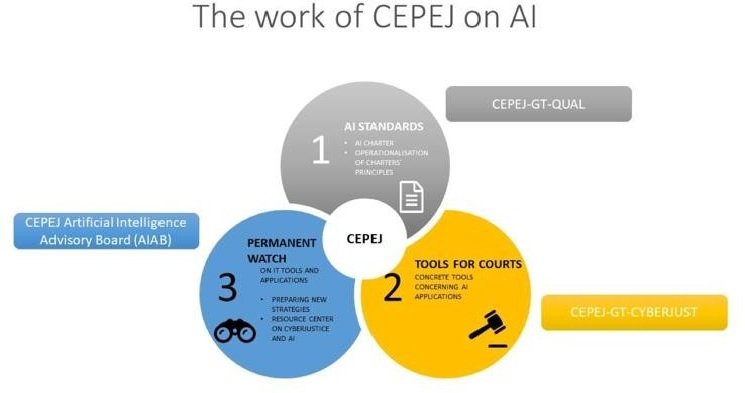
FIGURE 1 – CEPEJ’S REVISED ROADMAP. SOURCE: CEPEJ (2021)[19]
4. AI applications in the judiciary: state of the art
The aim of the Resource Centre is to serve as an exhaustive repository of information on AI systems and cyberjustice tools used in the judicial digital transformation, aligned with the principles set forth in CEPEJ’s Charter. It envisaged to bring clarity to discussions by distinguishing between theoretical and applied AI initiatives, while presenting factual information without endorsement. With a focus on Council of Europe member States, the Resource Centre aims for exhaustive coverage (= worldwide), facilitating ethical examinations of specific applications. Additionally, it supports authorities in their digital transformation efforts by providing benchmarking opportunities and fostering bilateral exchanges for mutual learning.
Currently, the AIAB agreed upon the publication of 176 AI applications. The publication criteria prioritize ‘completeness, relevance, and verifiability of information’,[20] requiring systems to have a public or official reference for verification. Internal systems without direct sources may be published with assurance from relevant domestic authorities. Additionally, systems must be mature (at least one year of functioning), functional, and relevant to the judiciary, excluding conceptual or project stages unless the AIAB considers them to have significant outreach. As mentioned before, Council of Europe member States have priority, but AIAB also looks at judicial systems worldwide.
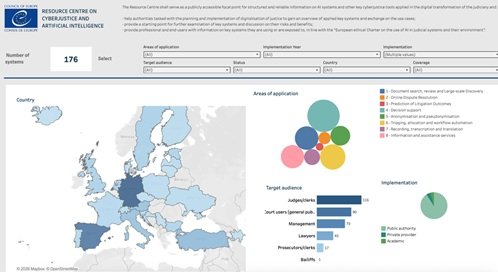
FIGURE 2 – CEPEJ’S RESOURCE CENTRE ON CYBERJUSTICE AND AI. SOURCE: CEPEJ (2026)[21]
The mapping of judicial AI-systems has started at the beginning of January 2023. As an independent Scientific Expert for the CEPEJ, I was requested to attend to this task and to conduct an initial study, comprehensively identifying AI systems and sources for regular review in the future. The scope of my work included an update of the proposed categorization of AI applications, as well as a comprehensive overview of existing judicial AI and relevant cyberjustice tools. The Resource Centre was updated and completed with new relevant AI applications on a quarterly basis throughout the entire year 2023. As it might be interesting to see how the Resource Centre evolved in terms of numbers, the 1st batch of AI tools published comprised a total of 47 systems. The 2nd batch reached 65 AI tools, and the 3rd batch comprised 92 AI tools. A 4th batch was approved by AIAB in December 2023, and the Resource Centre was thus updated to a total of 100 AI tools, and so on and so forth.
Thus, today there are published a total of 176 AI tools deployed in the judicial environment, out of which 146 are used in the Council of Europe member States. The database offers information on the title of AI tools (original and English translation). Then, it identifies the areas of application. At an initial stage, there were 9 different areas of applications, defined as follows:
- Document search, review, and Large-scale Discovery: solutions which create a searchable collection of case-law descriptions, legal text, and other insights to be shared with legal experts for further analysis and large-scale discovery on high volumes of electronic documents;
- (Automated) Online Dispute Resolution: solutions which cover technologies used for the resolution of disputes between parties with limited human intervention, which can be achieved through hardware and/or software. Initially, the word ‘automated’ was part of this category’s name;
- Prediction of Litigation Outcomes: solutions which learn from large datasets to identify patterns in the data that are consequently used to visualize, simulate or predict new litigation outcomes;
- Decision-support (and decision-making): solutions which facilitate or fully automate decision making processes in the justice systems. Initially, this category comprised also ‘decision-making’, however due to the manner in which these tools operate, the last part was decided to be deleted;
- Anonymization and pseudonymization: solutions which are used for removing identifying information such as personal data of court users;
- (E-filing: technological solutions which facilitate access to justice by establishing a digital channel that enables the interaction and exchange of data and e-documents between courts and court users;)
- Triaging, allocation, and workflow automation: solutions which are used to facilitate or complete some tasks and activities during the lifecycle of the proceedings within the Case Management System, minimizing the need for human input. Examples are registration and allocation of court matters, assigning levels of priority to tasks or individuals to determine the most effective order in which to deal with them;
- (Natural Language Processing) / Recording, transcription and translation: solutions which are capable of recognizing and analyzing speech, written text and communicating back. Their main use for courts is in voice/speech recognition and (hearing) transcription of court proceedings. This category changes its name completely, from NLP to Recording, transcription and translation;
- Information/assistance services: solutions which provide individuals with information on services available in the justice systems and link individuals to the services and opportunities that are available.[22]
The main critique of these categorization relied in the mix between tools (i.e., automated online dispute resolution, anonymization, e-filing) and techniques (e.g., natural language processing). It comes as no surprise, defining levels of taxonomy was an ongoing task, the fifth category does not exist anymore, namely e-filing, as their potential risks does not fall within the scope of AI regulation.
The Resource Centre presents also information about the year of implementation of the AI tools therein, the type of authority that has implemented them – here, the defined options initially were public, private and mixed (public-private collaborations). As a result of finding quite a significant volume of AI tools developed in academia, it was decided to introduce the academic category after the 1st batch of AI tools were published on 5th of April 2023. This date corresponds also with the official launch of the Resource Centre. While there were only 6 systems initially in the published database, during the collection of the information, it resulted that there are a great number of pilot projects currently developed in academia.
Next, the Resource Centre provides information regarding the audience targeted by each of these applications. As previously mentioned, the database understands broadly the term of judiciary, thus it consisted initially of court users, court management, judges, lawyers, and prosecutors. Now it comprises the following: judges/clerks, court users (general public), management, lawyers, prosecutors/clerks, and bailiffs. This means it is possible to find applications dedicated only to certain business areas. And last, the Resource Centre mentions the country in which the judicial AI tools are deployed, alongside a publicly available link for anyone interested to access them for more information. An exception to the latter is made whenever internal systems are concerned, but only if the information has been confirmed by the competent domestic authorities.
At the initial stage, the database contained only functional AI tools deployed in the judicial context. Now, it adds also: concept/planned, as well as pilot/beta versions. Also, the information must be complete – meaning that all defined categories need to be filled in, relevant – referring to the ability to categorize the systems in one of the dedicated fields of applications, and verifiable – either public source is available or official confirmation from the relevant domestic authorities has been received.
Given that the main purpose of the Resource Centre is to display valuable information, descriptive design seemed to be the most suitable choice in terms of methodology. Among various alternatives of sampling, constructing a corpus of empirical examples for understanding the state of art and the interest in judicial AIs was chosen for the task at hand.
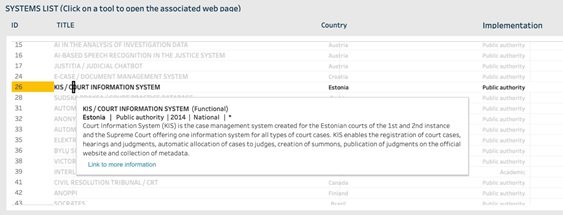
FIGURE 3 – CEPEJ’S RESOURCE CENTRE ON CYBERJUSTICE AND AI. SOURCE : CEPEJ (2026)
Hence, a questionnaire was prepared and sent to the European Cyberjustice Network (ECN), which has been set up precisely to allow exchange of information on good practices and then to help advance CEPEJ’s initiatives in offering support to member States regarding the digital transformation of the judiciary. Simultaneously, an open call for input for the CEPEJ’s Resource Centre was launched on social media (more precisely, on LinkedIn) at the end of January 2023. This way, both domestic national authorities and any other interested party (including private providers, or simply informed legal professionals, academics, etc.) had the opportunity to express their knowledge and contribute to the first judicial AIs database.
As regards the answers from the ECN, a total of 37 replies were received, including replies conforming that there are no AI applications currently used in the judiciary in their respective jurisdictions. Regarding the open call for input, it reached 5,218 accounts, and a total of 25 replies were initially received. Evidently, all the replies were analyzed and depending on their relevance, it was decided whether to be included in the database. Further, a screening of all relevant sources was conducted. This includes websites, academic articles, any other relevant documents published online, such as blog posts, reports, or guides. In addition, to facilitate receiving information, the CEPEJ created an online form, publicly accessible on the official site of the Council and easy to fill in.[23]
Let us look at the key findings resulting from this study. At this stage, a total of 238 AI tools have been identified, however only 176 of those accomplished the criteria for publication described above. The main reason for those which are not yet published is that the information received is not complete, thus further inquiries must be made before publication.
Out of the total of 176 AI applications listed in the published database of the Resource Centre, 37 within the document search, review and large-scale discovery, 10 are online dispute resolution tool, 4 refer to the prediction of litigation outcomes, 70 within the decision-support, 26 are anonymization and pseudonymization tools, 43 fall within the triaging, allocation and workflow automation category, 17 are recording, transcription and translation tools, and lastly 36 fall within the information and assistance services category. The reason why the numbers exceed the total number of published tools is because the database was designed to comprise, when needed, a second area of application.
As regards the target audience, referring always to the published database, 1 is dedicated to bailiffs, 91 to court users (general public), 116 to judges/clerks, 43 to lawyers, 73 to management, and 17 to prosecutors/clerks.
Finally, it comes as no surprise that public authorities are the ones who implement judicial AIs more often than private providers, at least for the moment. Due to technical constraints, we might see an increased trust in private providers, at least regarding mixed collaborations. Thus, most AI tools in the Resource Centre are implemented by public authorities (comprising public-private collaborations) – 160 to be precise, then 9 are developed by private providers, and 7 within academia. Here it is important to mention that while initially the published database comprised also system designed by and dedicated strictly to the private sector (for instance, for law firms), now it comprises only those systems dedicated by the private sector but with a general purpose (i.e., Co-Pilot).
The countries that currently excel at deploying AI tools in the judicial environment are: Germany (36), Spain (30) and Turkey (11). Then, 9 systems are in use in Italy, Austria and the U.S.A., 6 in the Netherlands, 5 in Brazil, China, Sweden, the United Kingdom, 4 in Bulgaria, Estonia, Singapore, 3 in France, Portugal, Slovenia, 2 in Australia, Croatia, Finland, India, Latvia, Poland, Switzerland, Ukraine, and only 1 in Argentina, Azerbaijan, Canada, Columbia, Czech Republic, Denmark, Iceland, Lithuania and Serbia.
As mentioned in the introduction, this is just a preliminary analysis of the existing published data within the Resource Centre. An exhaustive study on identifying AI systems and sources for regular review is currently ongoing, therefore an updated version of this analysis will be published as a follow up to the article at hand. After this preliminary analysis, let us look at one example per each area of application, as currently defined within the Resource Centre.
4.1. Document search, review, and Large-scale Discovery
A Case Law Engine was tailored for the Dutch Public Prosecution Service by LexIQ. It is designed to assist prosecutors and researchers in their daily tasks of searching, analyzing, and leveraging insights in criminal cases. Its primary objective is to streamline processes and provide users with an estimate of potential court outcomes, thereby saving time. Moreover, it aids in uncovering concealed information. Utilizing machine learning algorithms and incorporating features like data visualizations and intuitive search functions, it presents a novel solution to the challenge of information overload.[24]
4.2. Online Dispute Resolution
The Civil Resolution Tribunal,[25] situated in British Columbia, Canada, serves as a resource for individuals without legal representation to efficiently resolve specific disputes. Its jurisdiction includes small claims in civil matters valued at less than $5,000, condo disputes, motor vehicle injury claims up to $50,000, and disputes involving societies and cooperative associations. Appeals of its decisions can be pursued either before the Provincial Court or the Supreme Court for Judicial Review, depending on the nature of the issue.
4.3. Prediction of Litigation Outcomes
JURI SAYS is a web platform that autonomously forecasts decisions of the European Court of Human Rights by analyzing its communicated cases.[26] More precisely, the cases declared admissible by the Court, are communicated to relevant Governments, often years before final judgments are rendered. Consequently, JURI SAYS predicts forthcoming judgments and decisions of the court. The platform juxtaposes predictions with actual court decisions and is regularly refreshed to incorporate predictions for new cases. In addition, the system highlights key sentences and paragraphs crucial for predictions, thus distinguishing between violations and non-violations of human rights.[27]
4.4. Decision-support
RisCanvi is a tool developed collaboratively by the Catalan Prison Services and the Advanced Studies Group on Violence at the University of Barcelona; it serves to assess various decisions regarding inmates, including eligibility for prison furlough, transfers between facilities, and parole considerations. RisCanvi evaluates five distinct outcomes: violent recidivism, self-inflicted harm, violence among inmates or within facilities, furlough violations, and overall recidivism.[28]
4.5. Anonymization and pseudonymization
Denmark mandates a central judgment database – entitled Domsdatabasen – to increase transparency by providing public access to court rulings. This database comprises an internal portal for processing and pseudonymizing of judgments, as well as a public web portal for court users’ access. Within the internal portal, there is an AI system, named NER, which analyses PDF documents of judgments, suggesting text and names for pseudonymization. These are afterwards reviewed by a human/employee. The employee's feedback is then used to refine the system’s performance.[29]
4.6. Triaging, allocation, and workflow automation
Portugal has deployed an automated validation tool which verifies the process for documents necessary for nationality applications. Usually, these applications entail a substantial amount of paperwork and manual inspection by employees at the Institute of Registries and Notary, consuming thus significant working hours. The implementation of this automated validator enables the optimization and full digitization of the procedure, thereby enhancing efficiency and responsiveness to the rising influx of new requests.[30]
4.7. Recording, transcription and translation
Salme is a speech recognition tool which was developed through a collaboration between the Estonian Ministry of Justice, IT company CGI Estonia, and language-tech company Tilde. It has been implemented within Estonian courts to streamline operations. Utilizing machine learning and natural language processing (NLP), Salme is seamlessly integrated with the Estonian X-Road – a secure data exchange layer facilitating communication between public and private sector entities – to manage recording and transcription data. Salme offers both real-time and offline transcription capabilities, however offline transcription offers greater accuracy despite longer processing times. Users have also the option to timestamp recordings, simplifying the addition of notes for easier navigation through related audio recordings.[31]
4.8. Information and assistance services
Pozew.App was developed by a Polish lawyer, and it enables the transformation of numerical data into lawsuit text or judgments using AI. It extracts numerical data from invoice scans or payment documents, which the plaintiff then incorporates into lawsuit calculations, automatically converted into text. The underlying data is stored on a server with a randomly generated code. This text and code are submitted to the court, allowing easy access to the raw data. The court can select relevant data, perform calculations, and convert them into text, streamlining civil case proceedings, especially payment cases, to enhance cooperation between parties and expedite the process.[32]
5. Conclusions
The paper aimed to present the work of the CEPEJ, with a focus on its role on AI regulation, and to provide an overview of its Resource Centre – the first judicial AI database. Let us now draw some preliminary remarks about best practices in promoting the use of AI systems in the field of justice.
First, we can observe a worldwide dissemination of AI tools in the field of justice (i.e., 238 AI applications identified so far). We can then observe an uneven effect. This uneven effect refers to the discrepancy between Global North and Global South, but even between various Council of Europe member States, in terms of reliance on judicial AIs. Therefore, the dissemination of AI applications in the judiciary shall be carefully examined and periodically checked upon to ensure their implementation in line with, first, the three pillars of democratic societies: human and fundamental rights, democratic values, and the rule of law, and second, the 5 key principles set forth in the CEPEJ Charter.
Second, even in countries where we can identify quite a significant number of AI applications used in the judiciary (i.e., Italy), one must wonder whether, in practice, it is beneficial to have similar or almost identical applications deployed at each domestic court instead of having one national system. The disadvantage of disparate usage of similar applications is that it might end in the impossibility of corroboration of information between said applications in a few years from now.
The paper further aims to identify five best practices to support member States in the digital transformation of the judiciary in manner compliant to human rights, and particularly compliant to the 5 key principles of the CEPEJ Charter.
5.1. The need for member States to coordinate with the CEPEJ in order to ensure an effective implementation of the Charter.
Considering the increasing number of AI applications used in the judicial environment and its surroundings, it is imperative for domestic authorities to collaborate and coordinate with the CEPEJ Secretariat. It would also be highly recommended for the competent domestic authorities (i.e., Ministries of Justice) to reach out to other jurisdictions that have already deployed similar applications. This could both save time and financial resources.
5.2. Establishing a right to opt-out.
Such a right would first safeguard the right of the parties to effectively participate in the judicial proceedings. If anything, it would simply be an interpretation of Article 6 of ECHR in light of present-day conditions. This right could be translated in between the following lines:
(i) everyone is entitled to be informed of the use of an AI application in judicial proceedings in which them are involved;
(ii) everyone is entitled to opt out of the use of such AI applications.[33]
5.3. Providing trainings both to judicial operators and court users
Being provided with the possibility to address various shortcomings (i.e., financial and human resources) is without a doubt an incredible opportunity for member States. However, these investments should foresee from the very beginning also funding for trainings to certify judicial operators and court users. These trainings should allow them to understand the inner workings of AI applications in general, potential challenges and risks, but also their rights and duties in relation to the use of AI in the judiciary.
5.4. If exposed to an AI application in judicial proceedings, a party should be allowed time to familiarize themselves with its features (i.e., videoconferencing)[34]
Such a recommendation was already made by CEPEJ in the context of videoconferencing. It emphasized the need to allow for a test to be conducted in order to ensure that the party is equipped with the knowledge to operate the application at hand. The CEPEJ further offered the example of the Australian guide on Videoconferencing in the Federal Court,[35] which in addition asked the participants to the proceedings to also log in 15 minutes before hearings. This again allows for dealing with any technical issues, if needed.
5.5. The use of an evaluation tool throughout the lifecycle of judicial AIs
Evaluating compliance with human rights and the CEPEJ Charter is a concern which should be sought throughout the lifecycle of judicial AIs, and not only at one given stage (i.e., development or, let us say, one year after deployment). Such an approach would allow to mitigate risks which can appear at various stages (for instance, risk of using an AI model which was initially trained for other purposes; or the risk of discriminatory outcomes; or risk of violating human rights – the right to a fair trial and an effective remedy, etc.).
To conclude, the paper aimed to draw preliminary remarks of best practices to be carefully considered by member States when designing, developing, and deploying AI applications in the judicial environment and its surroundings. By doing so, it referred to the role of the CEPEJ and the added value of its Resource Centre on Cyberjustice and AI, to whose creation the author contributed. The need for collaboration between member States and the CEPEJ remains a central element, especially to ensure the digitalization of justice aligns with the Council of Europe’s three pillars: human rights, democracy and the rule of law.
* Anca Radu: Independent Scientific Expert, CEPEJ, Council of Europe. Postdoctoral Researcher, The Justice and AI Jean Monnet Centre of Excellence, Liège University. Research Consultant, Robert Schuman Centre for Judicial Cooperation, European University Institute. Email: anca.radu@eui.eu.
1. For instance, the Finnish Automatic anonymization and content description of documents containing personal data (ANOPPI), which is the first pseudonymization tool developed by the Ministry of Justice for court decisions. More information about the tool here: Arttu Oksanen, Eero Hyvönen, Minna Tamper, Jouni Tuominen, Henna Ylimaa, Katja Löytynoja, Matti Kokkonen, Aki Hietanen, A Pseudonymization Tool for Legal Documents for Linked Data Publication and Use on the Semantic Web (2022) CEUR Workshop Proceedings: https://seco.cs.aalto.fi/publications/2022/oksanen-et-al-anoppi-2022.pdf, (last visited Apr. 11, 2026).
2. Criminal Justice Testing and Evaluation Consortium, Chatbots in the Criminal Justice System. An overview of chatbots and their underlying technologies and applications (2020) the U.S. Department of Justice: https://cjtec.org/files/chatbots-criminal-justice, (last visited Apr. 11, 2026).
3. One such example is the Estonian Public E-file, which allows the parties to proceedings and their representatives to participate in civil, administrative, criminal and misdemeanour proceedings electronically. Requests for expedited proceedings of orders for payment in debt and maintenance allowance claims can also be submitted. The parties to proceedings can monitor the progress of the proceedings, receive, and submit documents and read the digital court file (in civil and administrative court cases). It is also possible to make queries in the criminal records database via the e-File. More information can be found here: https://etoimik.rik.ee, (last visited Apr. 11, 2026).
4. See for example, Marco Lippi, Przemyslaw Palka, Giuseppe Contissa, Francesca Lagioia, Hans-Wolfgang Micklitz, Giovanni Sartor, Paolo Torroni, CLAUDETTE: An Automated Detector of Potentially Unfair Clauses in Online Terms of Service (2019) Artificial Intelligence and Law 27(2), pp. 117-139: https://doi.org/10.1007/s10506-019-09243-2, (last visited Jan. 27, 2026).
5. Lucy Suchman, Imaginaries of omniscience: Automating intelligence in the U.S. Department of Defense (2022) Social Studies of Science https://doi.org/10.1177/03063127221104938, (last visited Aug. 10, 2025).
6. Toward the end of 2021, the European Commission for the Efficiency of Justice (CEPEJ) adopted the ‘2022- 2025 CEPEJ Action plan: Digitalization for a better justice’, where it raised the awareness of domestic courts about the need to monitor their case flows, with a clear focus on identifying and dealing with backlogs.
7. In 2019, being interviewed for the Financial Times – ‘UK police test if computer can predict criminal behaviour’, the chief officer of Durham police declared that ‘I have had to cut my staff every year. I have now got a third less money than I had in 2010’: https://www.ft.com/content/9559efbe-2958-11e9-a5ab-ff8ef2b976c7, (last visited Dec. 10, 2025).
8. About the CEPEJ, CEPEJ Information Leaflet: https://rm.coe.int/version-finale-depliant-anglais-27-09-2021- prems-124721-eng-2045-depli/1680a3f63e, (last visited Mar. 26, 2026).
9. On 24 June 2022, I have been selected as an independent Scientific Expert before the CEPEJ. In this quality, on 24 January 2023, I have started to collaborate with the CEPEJ on creating the Resource Centre on Cyberjustice and AI. However, all the opinions expressed in this paper belong to me, and do not reflect in any way the official position of the Council of Europe, nor the one of the CEPEJ or any of its bodies.
10. https://www.oxfordreference.com/display/10.1093/acref/9780197583104.001.0001/acref-9780197583104-e-1271 (last visited Aug. 9, 2026).
11. Besides states who enjoy Observer Status before the Council of Europe - Holy See, Canada, Japan, Mexico, and the United States -, the Committee of Ministers decided to extend this Observer Status before the CEPEJ also to the following: Guatemala, Israel, Kazakhstan, Morocco, and Tunisia: https://www.coe.int/en/web/cepej/about- cepej, (last visited Mar. 28, 2026).
12. About CEPEJ’s evaluation of judicial systems: https://www.coe.int/en/web/cepej/cepej-work/evaluation-of- judicial-systems, (last visited Mar. 28, 2026).
13. European Commission for the Efficiency of Justice, The European Ethical Charter on the use of AI in judicial systems and their environment (3-4 December 2018), Adopted at the 31st plenary meeting of the CEPEJ, Council of Europe: https://rm.coe.int/ethical-charter-en-for-publication-4-december-2018/16808f699c, (last visited Mar. 7, 2026).
15. European Commission for the Efficiency of Justice, CEPEJ(2020)15Rev, Possible introduction of a mechanism for certifying artificial intelligence tools and services in the sphere of the justice and the judiciary (8 December 2020) Adopted at the 34th plenary meeting of the CEPEJ, Council of Europe: https://rm.coe.int/feasability-study- en-cepej-2020-15/1680a0adf4, (last visited Aug. 9, 2025).
16. European Commission for the Efficiency of Justice, CEPEJ(2021)16, Revised roadmap for ensuring an appropriate follow-up of the CEPEJ Ethical Charter on the use of artificial intelligence in judicial systems and their environment (8-9 December 2021) Document adopted at the 37th plenary meeting of the CEPEJ, Council of Europe: https://rm.coe.int/cepej-2021-16-en-revised-roadmap-follow-up-charter/1680a4cf2f, (last visited Aug. 9, 2025).
17. As previously mentioned, I was the independent Scientific Expert in charge of creating the database which took the form of the Resource Centre on Cyberjustice and Artificial Intelligence.
18. This choice is reflected in the parameter ‘Target Audience’ of the Resource Centre.
19. CEPEJ(2021)16, Revised roadmap for ensuring an appropriate follow-up of the CEPEJ Ethical Charter on the use of artificial intelligence in judicial systems and their environment, cited above.
20. More about the Resource Centre publication criteria: https://www.coe.int/en/web/cepej/resource-centre-on- cyberjustice-and-ai#{%22202452374%22:[3]}, (last visited Mar. 31, 2026).
21. The Resource Centre can be consulted here: https://www.coe.int/en/web/cepej/resource-centre-on-cyberjustice-and-ai (last visited Apr. 20, 2026).
22. More about the Resource Centre’s areas of application: https://www.coe.int/en/web/cepej/resource-centre-on- cyberjustice-and-ai#{%22202452374%22:[3]}, (last visited Mar. 31, 2026).
23. The form is available for consultation here: https://forms.office.com/Pages/ResponsePage.aspx?id=grBJPtViSUilsIbtUZKH0rzz1_BuYuZAr6HjclqFTBJUQUxQSDBPNlRKRTVZVDM1UlMxS0tZNDQxTy4u (last visited Apr. 20, 2026).
24. More info about the Case Law Engine created by LexIQ: https://www.lexiq.nl, (last visited: Mar. 31, 2026).
25. More about the Canadian Civil Resolution Tribunal: https://civilresolutionbc.ca, (last visited: Mar. 31, 2026).
26. More about JURI SAYS: https://jurisays.com, (last visited: Mar. 31, 2026).
27. Medvedeva, M., Xu, X., Wieling, M. & Vols, M. (2020). JURI SAYS: An Automatic Judgement Prediction System for the European Court of Human Rights. In JURIX 2020, pp. 277 - 280.
28. Andrés-Pueyo, A., Arbach-Lucioni, K. and Redondo, S. (2018). The RisCanvi. In Handbook of Recidivism Risk/Needs Assessment Tools (eds J.P. Singh, D.G. Kroner, J.S. Wormith, S.L. Desmarais and Z. Hamilton). https://doi.org/10.1002/9781119184256.ch13, (last visited Mar. 31, 2026).
29. More about the Danish Domsdatabasen: https://domsdatabasen.dk, (last visited Mar. 31, 2026).
30. More about the Portuguese Automatic Validator of Documents Authenticity for Online Nationality Applications: https://govtech.justica.gov.pt/en/portfolio/automatic-validator-of-documents-authenticity-for-online-nationality- applications/, (last visited Mar. 31., 2026).
31. More about Salme, the Estonian speech recognition tool: https://e-estonia.com/introducing-salme-estonian- courts-speech-recognition-assistant/, (last visited Mar. 31, 2026).
32. More about Pozew.App: https://pozew.app, (last visited Mar. 31, 2024). The application was partly translated into English; this translation can be found here: https://pozeweu.web.app, (last visited Mar. 31, 2026).
33. Such an interpretation would also be in line with the guidance from CEPEJ(2020)15Rev, Possible introduction of a mechanism for certifying artificial intelligence tools and services in the sphere of the justice and the judiciary, cited above, p. 17.
34. European Commission for the Efficiency of Justice, Guidelines on videoconferencing in judicial proceedings, document adopted by the CEPEJ at its 36th plenary meeting (June 2011: https://rm.coe.int/cepej-2021-4-guidelines-videoconference-en/1680a2c2f4, (last visited Mar. 31, 2026).
35. More about the Australian guide on Videoconferencing in the Federal Court: https://www.fedcourt.gov.au/going-to-court/videoconferencing-guide, (last visited Mar. 31, 2026).